Our Services
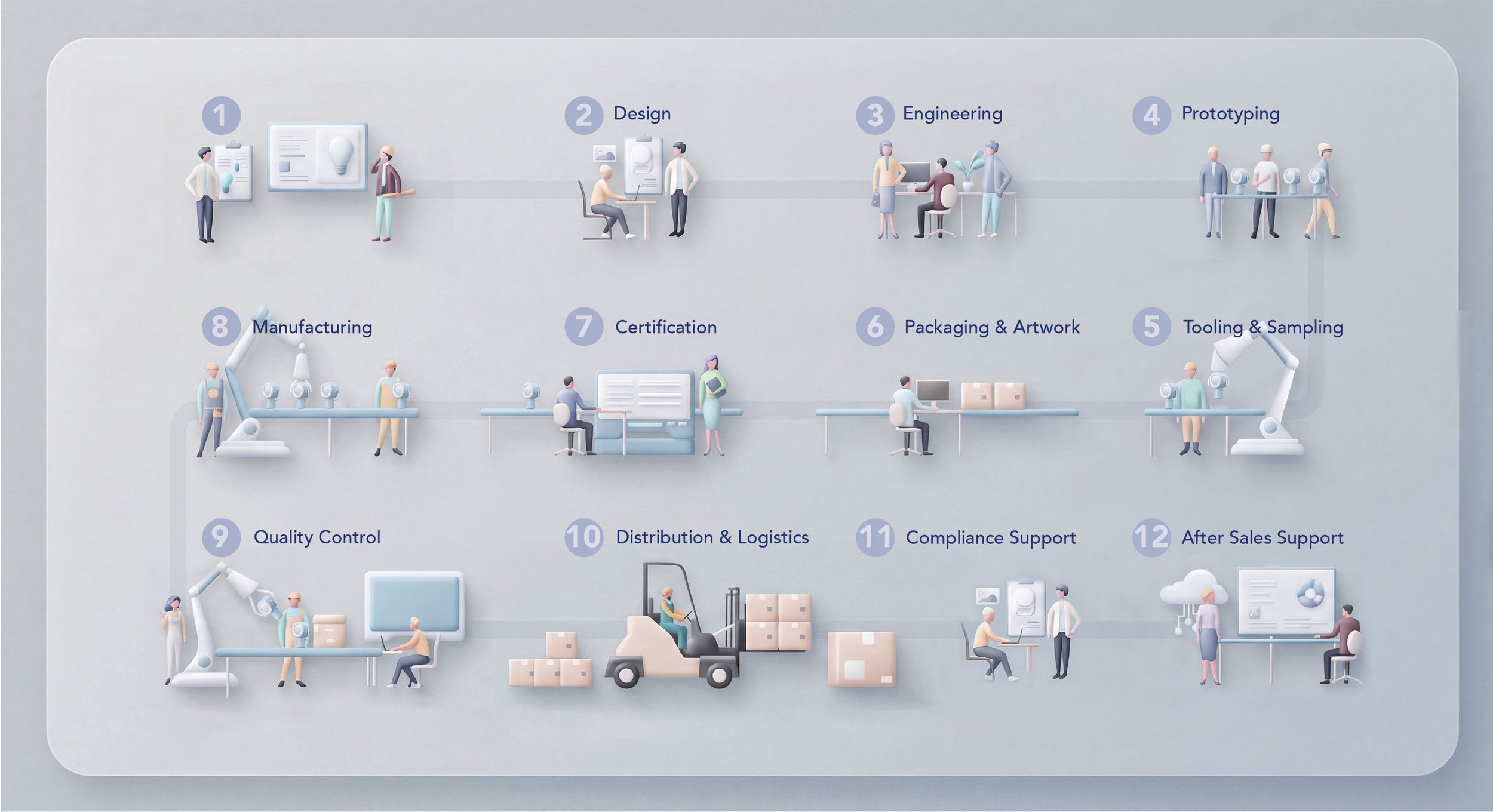
From first idea to logistics and launch, we support you with design, engineering, manufacturing, and operational handover — offering a wide range of services along the entire product journey.
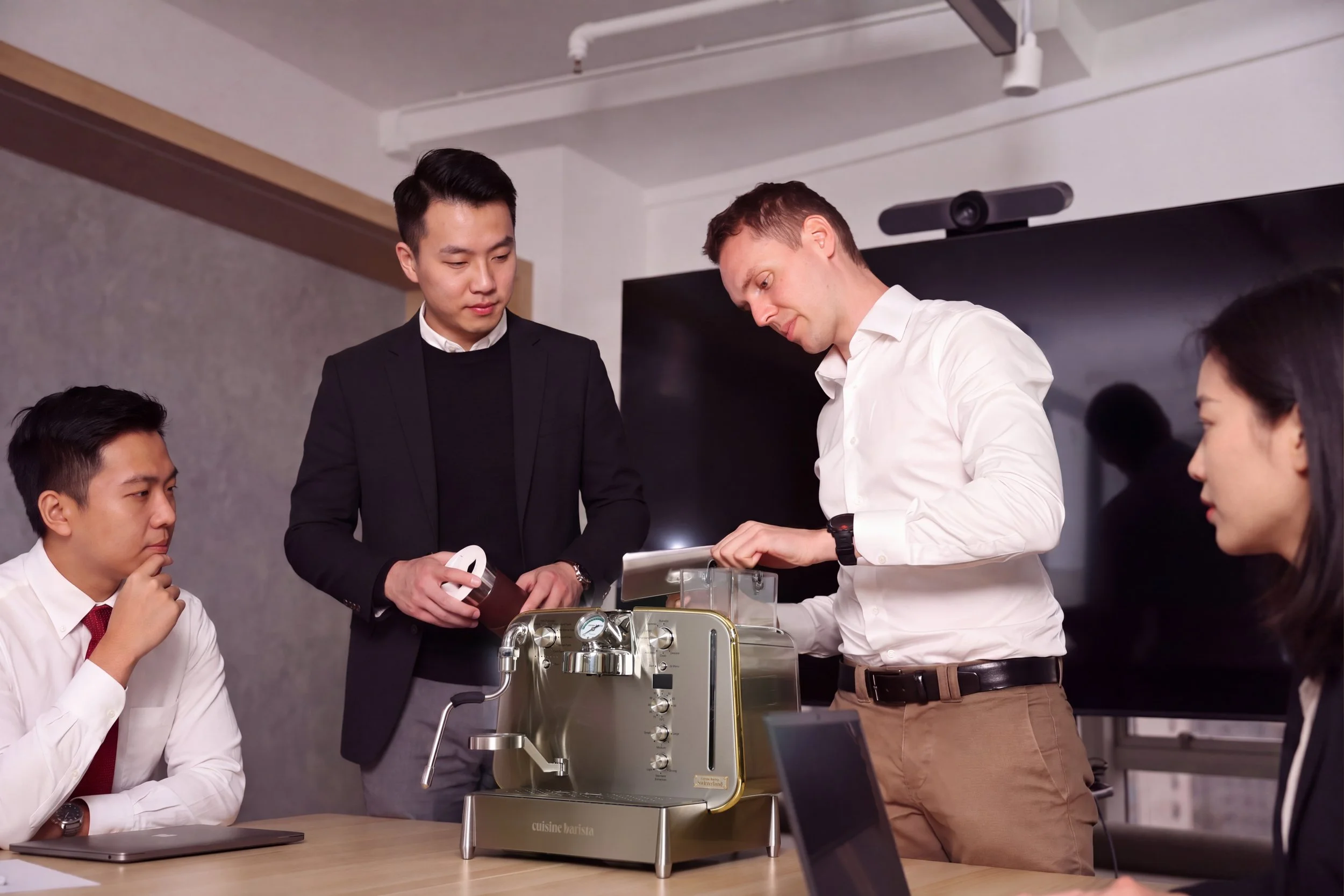
The Product Journey

Idea
Every successful product begins with an innovative idea — often still rough and unrefined. We support you from this early stage by contributing our industry expertise to evaluate market potential and technical feasibility. All discussions take place in a trusted, confidential setting under an NDA. The key milestone of this phase is the joint definition of clear product requirements and specifications.

Design
Product design is often the first major challenge in the development process. Without a structured approach, early-stage projects can quickly encounter a classic “chicken-and-egg” situation: requirements are not fully defined, key components are not yet validated, and the design team lacks the data needed to proceed efficiently.
While iterations are a natural part of development, thorough groundwork in the Idea Phase — combined with the guidance of SPC’s experienced product design team — helps minimize unnecessary loops, saving both time and cost.

Engineering & Development
The engineering phase forms the core of the development process. At this stage, all product requirements and specifications are translated into a manufacturable concept based on the established design.
We leverage the strong engineering capabilities of our specialized manufacturing partners for system, mechanical, and electrical engineering, while closely overseeing the process through our project engineers. If our design team was involved earlier, they remain actively engaged to support adjustments in close coordination with engineering. For connected products (e.g. IoT or app-enabled devices), SPC also integrates these capabilities with support from its affiliated company, Tecpal.

Prototyping
To ensure performance and identify potential issues early, we follow an iterative, agile development approach:
Plan → Design → Develop → Test → Deploy → Review
Prototyping is central to this process and takes place before tooling begins. Beyond functional prototypes, we also develop ergonomic and aesthetic samples to closely simulate the final product’s look and feel. The resulting feedback is continuously fed back into design and engineering, helping to avoid costly tooling modifications later on.

Tooling & Sampling
Tooling marks a key milestone in bringing a product to life. It enables the transition from concept to scalable series production. At this stage, components become available more quickly and cost-effectively, and the product moves significantly closer to market readiness. During the sampling phase, initial units made from tooling parts are assembled and tested. These samples form the basis for in-house performance and durability testing, as well as external certification—ensuring the product meets all functional and regulatory requirements before mass production begins.

Packaging & Artwork
Packaging design is a critical part of the overall product experience. While often treated as secondary, it plays a key role in the customer’s first interaction with the product.
At SPC, packaging is therefore approached as a core element of development. We balance visual appeal, product protection, cost efficiency, and sustainability, ensuring that the packaging aligns with the product’s market positioning and enhances overall customer satisfaction.

Certification
SPC combines in-depth regulatory expertise with strong partnerships across accredited testing laboratories and certification bodies to ensure smooth and reliable market access. From the early stages of development, we proactively integrate all relevant safety, regulatory, and documentation requirements — minimizing risks, avoiding delays, and reducing costly redesigns.
Through our experience and established network, we guide projects efficiently through the full compliance process, covering standards such as CE, FCC, UL/ETL and beyond. This integrated approach ensures that products are not only technically and commercially successful, but also fully aligned with the requirements of their target markets. The process is managed end-to-end — allowing our clients to focus on the product while we take care of the formalities.

Manufacturing
Manufacturing excellence depends on the right partners. SPC collaborates with specialized manufacturers across a broad range of product categories. With decades of experience — particularly in household electrical appliances — we have successfully developed and produced a wide variety of products.
This foundation has enabled us to build and maintain a carefully curated and continuously audited supplier network. The result is a robust and scalable production ecosystem that allows us to bring new product ideas to market efficiently, reliably, and with consistent quality.

Quality Control
All of our manufacturing partners operate advanced quality management systems in line with ISO 9001, covering key control stages:
SQE (Supplier Quality Engineering) for audits and inspections at sub-suppliers
IQC (Incoming Quality Control) for incoming components
IPQC (In-Process Quality Control) on the assembly line
FQC (Final Quality Control) for finished goods
QA (Quality Assurance) for systematic defect prevention
In addition, SPC places strong emphasis on independent verification. We conduct pre-shipment inspections and offer tailored quality control measures, carried out by trained staff, that go beyond standard third-party inspections — ensuring consistent product quality before delivery.
Distribution & Logistics
SPC provides end-to-end support for all logistics-related matters—or manages the entire process on your behalf. Especially startups and smaller companies with limited supply chain experience often face coordination challenges, delays, and cost inefficiencies. We operate a dedicated logistics unit with deep expertise in all relevant processes and shipping documentation. Through close partnerships and strong volumes with selected freight forwarders, we secure competitive rates and priority handling.
This allows our partners to focus their resources where they add the most value: bringing their products successfully to market.

Compliance Support
Beyond technical product certifications, SPC also provides comprehensive support for extended compliance requirements in highly regulated markets such as the EU. This includes obligations under EPR (Extended Producer Responsibility) frameworks—covering electrical waste (WEEE), packaging waste, and battery regulations. As these regulations are continuously evolving, we stay up to date with the latest legal developments and ensure that all requirements are considered early in the process.
To simplify market entry and ongoing compliance, SPC works closely with trusted, locally established partners within the EU, who manage country-specific registrations, reporting obligations, and administrative procedures. This ensures full regulatory alignment while minimizing complexity and overhead for our clients.

After Sales Support
Initial customer feedback after market launch is a valuable source of further optimization. Even with extensive development and testing, real-world use often reveals additional improvement potential. SPC therefore continues to support its partners beyond the development phase as part of an ongoing improvement process, working closely with manufacturing partners to refine and enhance the product. For us, this continuous support is a natural extension of our collaboration—not an added or unexpected service.
In addition, we provide accessories, spare parts, and packaging solutions as required, ensuring long-term product support and availability.
Does your product need app connectivity?
IoT - When Software Adds Real Value
SPC integrates connected solutions into the product journey when software enhances usability, functionality or long-term value.

Enhanced Product Functionality

Better User Experience
Insights Over Time